The Platform

One platform. Four measurements. A vendor you can actually reach.

MineVision OS is the measurement and mapping layer for a modern Indian mine. Four modules sharing the same hardware, data layer and integration surface — so one pilot becomes a foundation, not a silo.

What "one platform" actually means

Four products that don't fight each other.

Most operators deal with a different vendor for payload measurement, another for mapping, another for analytics — each with their own hardware quirks, data formats, integration contracts and support desks. MineVision consolidates that. Same sensor heritage. Same data pipeline. Same people picking up the phone.

Module 01 Available

Payload Scanner

Gantry-mounted LiDAR and imaging over the haul road. Continuous truck payload measurement at drive-through speed.

Module 02 Field trials

Conveyor Intelligence

Over-belt sensor array. Real-time ore grade classification via reflectivity and imaging.

Module 03 Available

Surface Mapping

Drone-based LiDAR and photogrammetry. Lease surveys, stockpile volumetrics, compliance overlays.

Module 04 Available

Pit Mapping

Vehicle-mounted mobile LiDAR for in-pit volumetric analysis and geometry capture.

Shared hardware substrate

The same mechanical LiDAR and imaging stack powers every module. Replacement parts, calibration procedures and field support work across the fleet.

Unified data layer

Point clouds, classifications, timestamps and imagery flow into one pipeline. REST, webhooks or MQTT into your ERP. CSV and JSON exports without contract negotiation.

Edge-native compute

Inference runs on-device. Low bandwidth. Local-first operation with cloud sync when connectivity permits — important in sites where 4G is partial.

Built for field conditions

IP65 enclosures. −10 °C to 50 °C operating range. Dust mitigation with water-wiper sensor cleaning. Vibration-tested mounts for haul road conditions.

Why it's safe to pilot

Built by a proven LiDAR team. Run from inside Indian mining.

Two things make a platform vendor credible to a mining operator: engineering that has already shipped something like this, and pilot management that understands what it's like to run a mine. MineVision has both.

Engineering heritage

Proven LiDAR systems work.

The hardware and AI behind MineVision OS come from HC Robotics — a Hyderabad-based team with delivered projects in US infrastructure mapping and Indian industrial sites. The mapping pipeline that underpins Modules 03 and 04 has already run in production, including daily volumetric analysis for industrial inventory sites.

What's new here is the application — adapting a mature sensor stack to the specific conditions of Indian mining. The engineering risk on the core pipeline is low; the work is in hardening, packaging and mine-specific classification.

Domain grounding

A team that runs mines.

MineVision India leads deployment, integration, pilot operations and customer relationships. One of the co-founders actively operates mines in Eastern India. The product roadmap started from operational pain — underload, carryback, expensive surveys — not from a sensor looking for a use case.

Practically, this means pilots are scoped by people who have run shifts and managed trucking factors. When a site condition is unusual, it isn't a surprise. When a procurement team asks for documentation, it's ready.

For government and PSU procurement

Indigenous, by design.

Indian mining runs on tenders that meaningfully reward indigenous product. Imported scanners clear on paper but clear slowly through procurement. That gap is ours to close — every element of MineVision OS is Indian-developed: the hardware, the firmware, the AI models, the integration layer, and the support you'll speak to when something needs attention.

Procurement teams get the origin documentation they need at engagement. Compliance teams get the Make in India story that clears internal review. Operators get a vendor on the same landmass, not eight time zones away.

Conversations with state mining ministries, mining committee members and officials involved in government-run mines have been active and encouraging. Government R&D funding is a parallel pathway we're pursuing alongside commercial pilots.
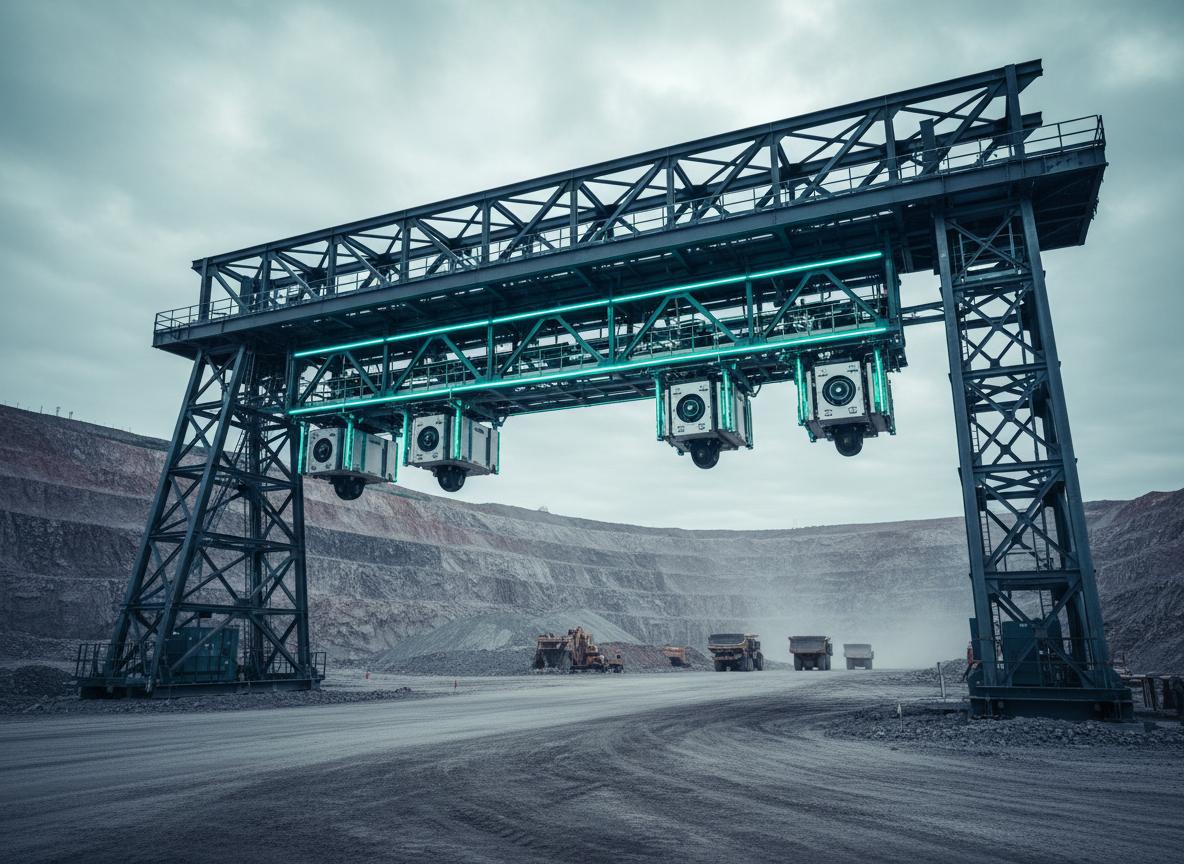
Scanner hardware
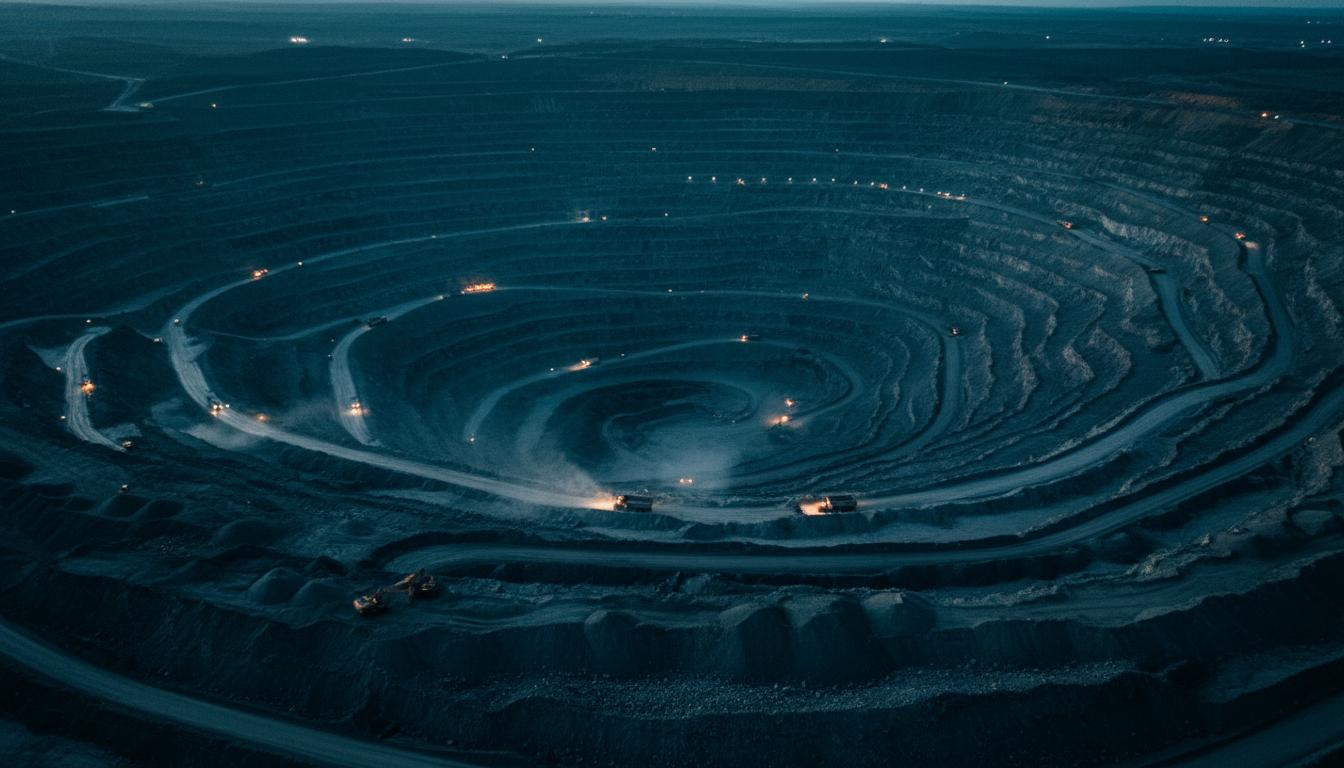
Jharkhand pilot site
Pilot site

Operational. In Jharkhand. Open for site visits.

Our pilot sits on a working bauxite mine in Eastern India — accessible from Ranchi, and representative of the real conditions any deployment will face. Dust, variable truck mix, partial 4G coverage, the full extraction-to-shipment workflow.

For prospective customers, the site is available for evaluation visits and joint sensor calibration. For procurement and compliance teams, it functions as a reference deployment you can observe in person before commissioning.

Access to additional bauxite, iron ore and coal sites in the same region supports extension of the Conveyor Intelligence classifier across material types.

Arrange a site visit →
What a pilot looks like

Six months. One module. Measurable outcomes.

A pilot is not a proof of concept sitting in a container. It's the first production deployment at your site, with defined measurement baselines, reconciliation against your existing systems, and an exit decision on commercial scale — informed by data, not vendor promises.

Month 1

Site survey and technical report

On-site visit, mounting design, power and network assessment. A formal technical report that state mining authorities and PSUs routinely request as part of sanctioning.

Month 2–3

Installation and parallel operation

Hardware install, calibration, and parallel operation alongside your existing weighbridge or survey provider. Accuracy is measured against your current baseline — not against our marketing.

Month 3–5

Live operation and reporting

Daily shift reports, weekly accuracy reconciliation, monthly ROI tracking. All data owned by you. All dashboards exportable.

Month 6+

Commercial decision

Decision to scale, add modules, or walk away — based on the pilot's measured results. No retention lock-in on pilot data if you choose not to proceed.

One pilot. One module. Real numbers.

Tell us about your site. We'll outline a pilot scope and a realistic timeline within two business days.

Talk to the team →